


America's Founding: A Tale of Dueling Visions
Updated: Oct 9
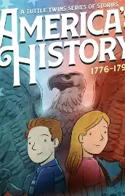
“If we have all of these checks and balances, how did we get the government we have today? It's just like the government that the Anti-Federalists feared! The Federalists promised it wouldn't be that way!” – A Tuttle Twins Series of Stories, America’s History, 1776-1791
At the time of the American Revolution, debt was less than 40 percent of GDP, with the overwhelming majority tied to wartime expenses. By 1835, debt was eliminated. Today, debt sits at 120 percent of GDP, the highest level since World War II. In 2026, the United States will pay more than a trillion dollars in interest on the debt alone. American Founding Father George Washington called public debt the greatest danger, while Thomas Jefferson saw it as a curse to be avoided.
In Connor Boyack’s 2023 book, “A Tuttle Twins Series of Stories, America’s History from 1776-1791”, Boyack recounts the history of the 13 colonies from the Declaration of Independence to the ratification of the Bill of Rights. During this period, two constitutions would be ratified: first, the Articles of Confederation, and then, the Constitution as we know it today. It is a story of the trade-off the statesmen made between freedom and the need to unite to defend the new nation. Suitable for children 7 years and older, the 13 original colonies not only built a system of self-government from scratch but united to fight the forces of Britain.
Following the Declaration of Independence in 1776, and during the 7 years of fighting the American Revolution, America’s first Constitution, the Articles of Confederation (AOC), was in force from 1781 to 1789. Drafted and ratified by the colonies, the primary focus of the new constitution was self-government. As such, a confederation was formed with a weak central government, with deference to state independence, and the protection of individual rights.
The legislative branch consisted of 1 vote per state under the newly formed Continental Congress. Its powers were limited to foreign affairs, management of the war, fiscal oversight, and conflicts between the states. Under this system of federalism, each state was required to maintain a militia (in place of a national force) and was responsible for debts to Congress. There would be no executive branch, as they feared one king would simply be replaced with another.
The decentralized structure of the AOC, however, did not allow the Continental Congress to tax, regulate international commerce, or enforce laws. As a result, they were unable to raise revenue or require the states to fund or provide troops. To pass laws, nine out of the 13 states were needed, with unanimous consent required to pass amendments.
During wartime, the Continental Congress organized the army, set military policy, and coordinated with foreign allies. They issued paper money to fund the war, borrowed from foreign powers, and collected contributions from the states, which had taxing power. They also procured domestic loans from wealthy patriots.
The supporters of the AOC would, ironically, come to be known as Anti-Federalists, since the Federalists who supported more federal power had already appropriated the name. A well-known Anti-Federalist, who was also called a liberal, was Thomas Jefferson. Liberals often represented the working class. Conservatives, on the other hand, led by Alexander Hamilton, John Adams, and James Madison, wanted a strong national government, much like England, with the same power that they themselves would control. They were an elite group who largely supported the privileged class.
But there were weaknesses with the AOC. In particular, the lack of power to tax and the inability to settle their debts. This led to the Constitutional Convention in 1787 to debate its replacement. Here, the Constitution of the United States, which was drafted to provide checks and balances, add an executive and judicial branch, and nationalize foreign policy, was initially rejected by the Anti-Federalists. The Bill of Rights was thus enacted to address their fears, which strictly limited federal power and guaranteed individual freedom.
It is clearer today that the real winners of the move to the Constitution over the Articles of Confederation are the Conservatives who longed for a power to match that of the British. As a result, the whims of the elite took precedence over the working man's yearning for freedom.
If hindsight were 20/20, perhaps the liberals of the time would have seen that the weakness of the Articles of Confederation was actually a strength.


Comments