


Government is Always the Problem: Christmas Edition
- Tamara Shrugged
- Dec 18, 2025
- 3 min read
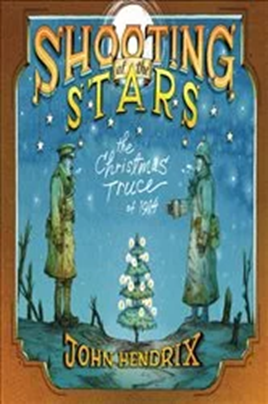
“Perhaps an Angel of the Lord was among us today- what else could create such spontaneous peace but the hand of God himself? For one glorious Christmas morning, war had taken a holiday”. – Shooting at the Stars
World War I was called the Great War for its unprecedented scale and devastation, with death rates into the millions. Beginning in August 1914, the main theater of battle was situated on the Western Front, between Belgium and Switzerland, where a large portion of the 65 million soldiers fought. Anticipating a brief war, due to the introduction of the machine gun, soldiers bided their time, hoping for an early end. Instead, the war raged for four more years, resulting in 15 million military and civilian deaths from either battle or through hunger and disease.
In John Hendrix’s 2014 Christmas book, “Shooting at the Stars”, Hendrix tells the true story through a fictional account of Christmas during the first year of World War I. As a British soldier wrote in a letter to his mother, on Christmas Eve, German soldiers began singing Silent Night after decorating trees for the holiday season, initiating a ceasefire that brought both sides together to celebrate the holiday. Through gifts and communion, warring armies laid down their weapons and worshiped together as one.
Initially filled with pride in their countries, soldiers received military training in preparation for battle, emphasizing strict physical fitness and discipline. Yet, at the start of the war, many countries turned to conscription, making service compulsory to bolster their armies.
Known for its trench warfare, soldiers dug ditches that were 6 feet deep by 3 ½ feet wide. As rain fell and mud accumulated, conditions were often miserable and inhospitable for those living in such close quarters. Filled with men from common walks of life, the average age of a soldier was between 25 and 30. Between the enemy trenches was the uncontrolled land, which was barely 100 feet apart. As the battle intensified, the men became cold, fearful, and increasingly hopeless.
When the Allied forces heard the singing from their German counterparts, many peered from their dugouts, astonished at what they saw. Slowly making their way to no man's land, opposing forces met face to face. But this act of grace didn’t come from the top down, but from the boots on the ground. Wars aren’t waged at the behest of the soldiers; they are fought at the command of their leaders, who suffer no injury or harm. Boys, who are sent to serve their country, having no animus for anyone, that day, simply acted on their humanity.
Brought together by a common faith and common fear, for a short time, the voiceless had their say. That this détente came at Christmas shows that Jesus is indeed the light of the world, a light in the darkness. As John 1:5 writes, “The light shines in the darkness, and the darkness has not overcome it.”
Hoping they could just go home and live in peace, the British soldiers reluctantly returned to their trenches, fearing that the war would soon resume. But after meeting the enemy on common ground, instead of shooting at their foes, they would shoot over the trenches, sparing the lives of their new acquaintances.
A year later, before Christmas 1915, angry commanders made sure that another truce would never again take hold. Prohibiting another unofficial ceasefire, soldiers were this time ordered to not only shoot at the soldiers outside the trenches, but also at the Christmas trees.
Wars are waged by politicians and bureaucrats for political and financial gain. When decisions are placed in the hands of the people, however, mercy has much to say.



Comments